I Built a Financial Literacy Course for My Kids. Now It’s for Yours.

During COVID-19, it nearly broke my heart watching my boys get handed a laptop by their teachers. All they had to do was click a button and say they were there. No learning. No experience. No effort. That was the new reality.

As a dad, this was not acceptable.

So I did what any slightly crazy but loving father would do. I withdrew them from public school — knowing that with my passion for teaching and even minimal effort, I could do far better than what the schools were doing. It turned out to be one of the best parenting decisions I ever made.

What followed was a two year journey I will never forget.

The RV That Became a Classroom

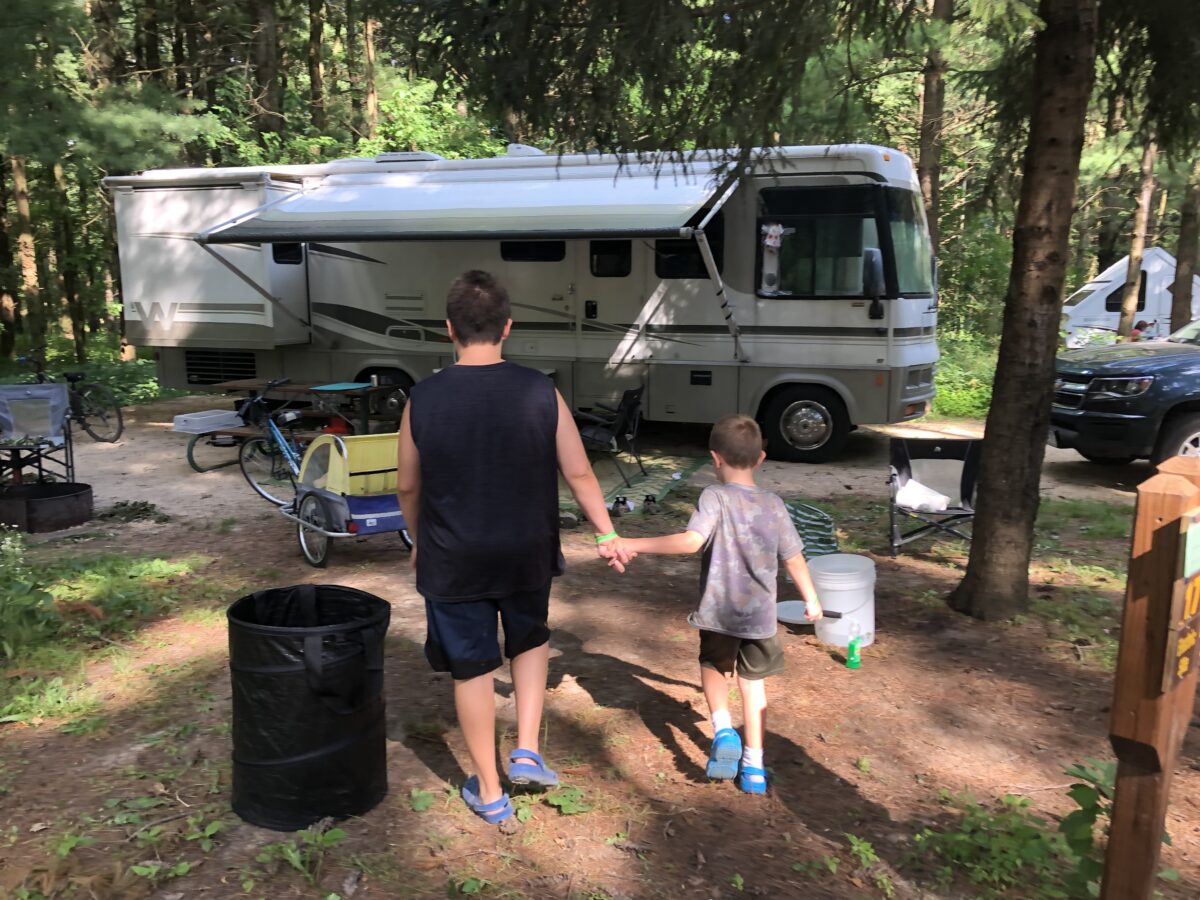
Two children walking toward a family RV at a forested campsite, representing the homeschool road trip journey that inspired Monthly Money: Base Camp
Our living room, classroom, and adventure vehicle — all in one

We had a junky RV that I used to complain about constantly — until the world shut down and we couldn’t fly anywhere. Suddenly that RV became a portal.

We studied history and science at home, then hit the road to live it. Our curriculum followed a simple but powerful idea — learn it first, then go experience it. We took a course called the History of Science, and it took us through the stories of the world’s greatest inventors, then challenged us to repeat their discoveries ourselves.

We spent a week camping at the Outer Banks of North Carolina studying flight — reading about Wilbur and Orville Wright, building our own understanding of aerodynamics, and then flying large kites on the same airstrip where the Wright Brothers first left the ground during their annual kite festival.

Those two years also took us across the country on countless family field trips — and contributed significantly to what is now a family total of 36 National Parks hiked and explored. Windows down, maps out, learning things that no classroom could have taught us.

I could write a book about those two years. It was a magical period of my life and theirs.

The Course I Built for My Boys

But during that same time, I noticed something that bothered me. Schools weren’t teaching financial literacy — not in any meaningful, comprehensive way. Some covered the basics. A checking account here, a savings account there. But most kids were leaving school with enormous gaps in their financial knowledge. Those gaps don’t stay hidden. They show up in adulthood, causing a whole variety of problems that follow people for decades.

So I decided to do something about it.

I created my own financial literacy course for my kids — and made them take it.

I built it to be fun and interactive, because personal finance doesn’t have to be dry or intimidating. It can be a journey. Much like this website, I wanted it to feel like an adventure worth taking, not a lecture worth dreading.

My boys took it. It worked. And I’ve been thinking ever since about how to make it available to other families who want the same thing for their kids.

Now I’m finally doing it.

Introducing Monthly Money: Base Camp

Where the financial climb begins.

Monthly Money: Base Camp is a youth financial literacy course built for parents and kids to take together. It covers the foundation — earning, saving, budgeting, first accounts, and basic investing — in a way that’s engaging, age-appropriate, and designed to actually stick.

We plan to launch in late summer or early fall 2026. The timing is a little bittersweet for me personally — my oldest is heading off to college right around launch. This course was built for him and his brothers first. Now I’m passing it on to your family.

There is a massive gap in our kids’ financial education and most schools aren’t going to fill it. That’s on us as parents. It’s our job to make sure our kids are prepared for adulthood — even when the system falls short.

Join the Waitlist

If you want to be among the first to know when Monthly Money: Base Camp launches — including early access and any launch pricing — join the waitlist below.

No spam. Just one email when the doors open.

See you and your kids at the top.

The Grocery Store Classroom: Teaching Kids to Shop Smart

Some of the best lessons about teaching kids to shop smart don’t happen at a desk. They happened in a souvenir shop. In a grocery store aisle. At a cruise ship port in Mexico with a belt buckle and a phone.

The moment you leave your home, the world is trying to take your money.

The classroom is everywhere. You just have to be willing to let the lesson happen — even when it’s uncomfortable.

The Dinosaur Souvenir Shop That Changed Everything

Isaiah was three years old when he received $25 in birthday money from his grandfather. A week later we found ourselves at a local dinosaur adventure attraction — the kind where you walk through and narrowly escape getting eaten. Great fun. And like every great tourist attraction, it ended the only way it could.

In a souvenir shop.

I watched his eyes light up the moment he saw the dinosaurs. He had his birthday money. He was ready. And then I looked at the price tags.

A single small plastic dinosaur. Thirty-five dollars.

I was disgusted. He was three. This was his money — money his grandfather gave him — and I wanted him to feel the full experience of spending it. But I also wasn’t going to let him get ripped off without at least showing him there was another way.

We walked out. He was disappointed. That part was hard. Watching your kid not get the instant gratification he was hoping for is genuinely uncomfortable as a parent. But I knew what was down the street.

Walmart.

We walked in and found the exact same dinosaurs — same size as the medium ones at the souvenir shop — for one dollar each. I told him to buy as many as he wanted.

He bought somewhere between fifteen and twenty dinosaurs. He still had money left over.

I will never forget the look on his face pushing that cart. It wasn’t just happiness — it was the beginning of understanding. He traded his birthday money for something that gave him far more value than one overpriced plastic dinosaur ever could.

Those dinosaurs were played with for years. Then passed down to a younger sibling. Then passed down again to a nephew. The lesson outlasted every one of them.

The Same Lesson — Ten Years Later in Mexico

Fast forward about a decade. Our family took a cruise — something we had never done. We found one leaving Texas headed to Mexico, kept it simple, kept it affordable. After our excursion we did what you always do at a tourist destination, something similar to our dinosaur experience.

We exited through the souvenir area.

Isaiah had been looking for a large belt buckle from Texas the entire trip and hadn’t found one. Then he spotted it — exactly what he wanted — at a vendor stand in Mexico. The lady wanted $85. He tried to negotiate. She wouldn’t budge.

He borrowed my phone, found a similar “but cooler” belt buckle on Amazon for $10, and placed the order right there on the spot.

It was waiting for him when we got home from the cruise.

Same kid. Same lesson. Ten years apart. Except this time I didn’t have to say a word. He did it himself.

That’s what happens when you let the lessons stick early.

The Grocery Store Is Your Best Classroom

You don’t have to wait for a dinosaur adventure or a cruise to Mexico. The grocery store is the most underused financial classroom in America and you’re probably already there every week.

Here’s how to turn every shopping trip into a lesson:

Unit pricing — show your kids the price per ounce or per unit on the shelf tag. The bigger package isn’t always the better deal. Let them figure out which one wins.

Generic vs name brand — pick one item and compare. Same ingredients, different packaging, different price. Let them decide which one to put in the cart.

The list vs the impulse — give older kids a budget and a list. Tell them they can keep whatever they don’t spend. Watch how quickly they become comparison shoppers.

The phone is a tool — teach teenagers to check Amazon, Walmart, or Google before buying anything over $20 in a store. Thirty seconds on a phone can save real money.

The Parent’s Job Is to Step Back

Here’s the hardest part of all of this — and the most important.

Your job is not to fix it. Your job is to let the lesson happen.

When Isaiah stood in that souvenir shop at three years old and couldn’t afford a single dinosaur with his birthday money — I could have just bought it for him. It would have been easier. He would have been happy in the moment.

But the discomfort of walking away is exactly what made the lesson stick. The joy of getting fifteen dinosaurs instead of one is exactly what made comparison shopping feel like winning instead of sacrifice.

You have to be willing to sit in the uncomfortable moment with your kid. Don’t rescue them from it. That moment is the classroom.

The families who raise financially smart kids aren’t the ones who shelter their children from financial reality. They’re the ones who let them experience it — safely, at a young age, with small stakes — so that when the stakes are high they already know what to do.

Start This Week

You don’t need a special occasion or a tourist trap souvenir shop. You just need a grocery list and a kid willing to learn.

Hand them the list. Give them a budget. Let them make the decisions.

And if you want to take it further, check out how we teach kids that work has value too.

And when they want to spend $35 on one thing when $15 could get them fifteen of the same thing— let the moment teach what no lecture ever could.

See you at the top.

The Lemonade Stand That Started It All — Raising Kids Who See Opportunities Everywhere

One thing I’ve tried to repeat to my kids about kid entrepreneurship is this: opportunities are everywhere.

Every time I collect the mail, walk around the yard, or drive my kids to school — I see them. You can’t pursue them all. But they’re there, constantly, waiting for someone to notice.

And when you find one that lines up with your passion, your interests, and your talent — you have to stop and ask yourself three questions:

Should I take this opportunity? Can I solve this problem? Can I make money doing this?

When the answer is yes — especially at a younger age — it’s worth pursuing. Because a kid who learns to spot opportunities, make money, and put their money to work early has a massive head start on the rest of the world.

The Day Lemonade Day Came to Town

My oldest son Isaiah was young when Lemonade Day — a national youth entrepreneurship program — showed up in our area. The moment I heard about it I recognized the opportunity immediately and signed him up without hesitation.

What happened next still gives me chills.

Isaiah didn’t just set up a stand on the corner. He met with Kroger and got an agreement to set up his lemonade stand outside one of their stores. He met the mayor. He was featured in a commercial shoot with Junior Achievement. He won awards from both IBM and Chase.

That one lemonade stand lit an entrepreneurial fire in him that has only grown brighter every year since. As a parent watching that unfold — it was one of the coolest things I’ve ever witnessed.

That was the beginning. And it all started because we were paying attention when the opportunity showed up.

A Note From Isaiah — My Son, and Now My Business Partner

Hi — I’m Isaiah, Tony’s oldest. When I saw my dad writing about young entrepreneurship I thought this was the perfect opportunity to jump in. And that’s exactly what entrepreneurship is about — jumping on opportunities.

At its core entrepreneurship has three parts:

Finding a problem. Solving it. Telling others and getting paid.

It really is that simple. And the best part? Anyone can do it — even kids. You don’t have to reinvent the wheel.

Think about Apple. They didn’t invent the computer or the phone. But they looked at what existed and asked — how do we make this simpler, more beautiful, and easier for people to use? That’s it. Find the problem, build the solution, make it accessible. Apple resonates with millions of people because they solved a real problem in a way anyone could understand.

Your version doesn’t have to be that big. It can start with something as simple as — people are thirsty. How do I solve that? Lemonade. Put up a sign so people know what you do. And put a dollar in your pocket.

That’s entrepreneurship. It starts younger than you think.

How to Create an Entrepreneurial Ecosystem at Home

Here’s the thing — you don’t have to wait for Lemonade Day to show up in your town. You can start building an entrepreneurial mindset in your kids right now, right inside your own home. This is kid entrepreneurship at its most basic level.

It doesn’t have to be outside the house. If finances allow you can also solve problems inside — like the trash is full or I’m hungry. The trick is creating what I call an entrepreneurial ecosystem right inside your own home.

Pay your kids to solve problems. Let them identify needs and fill them. Let them fail small and win small. Give them the experience of earning, solving, and delivering — before the stakes are high.

The earlier they learn to see the world as full of problems worth solving, the earlier they start building the mindset that creates wealth.

The Three Questions at the Heart of Kid Entrepreneurship

Post these somewhere. Say them out loud. Make them a habit.

Should I take this opportunity? Can I solve this problem? Can I make money doing this?

These are the questions at the heart of kid entrepreneurship. When all three answers are yes — encourage them to go. You’ll be amazed what happens when a kid believes the answer is always within reach.

See you at the top.

Chores, Allowance, and Teaching Kids That Work Has Value

From the time we start toddling around the house, we contribute. Maybe not intentionally at first — but at some point every family figures out the same truth: survival means everyone works together.

Think about it. Someone has to cook. Someone has to clean. Someone has to earn money, pay bills, go to the store, take out the trash. Every single thing that keeps a household running takes work. And when kids grow up understanding that — really understanding it — they develop something most adults wish they had learned earlier.

The understanding that work has value.

Chores Are Not Optional — But They’re Also Not a Job

Here’s a distinction worth making early with your kids.

Chores are the baseline. Making your bed, cleaning your room, helping with dishes, taking out the trash — these aren’t things you get paid for. These are your contribution to the household just for being a member of it. We all eat. We all make messes. We all clean them up.

This isn’t punishment. It’s survival. And teaching kids that early sets the foundation for everything else.

But here’s where it gets interesting — and where the real money lesson begins.

Above and beyond chores is where kids learn that solving problems has monetary value. When your child does something that goes beyond what you normally expect of them — that’s worth paying for. Mulching the yard. Washing the car. Organizing the garage. Helping with a project. These are real jobs that solve real problems and they deserve real compensation.

That distinction matters. Chores are contribution. Extra work is entrepreneurship.

Give Them the Opportunity to Earn

Once your kids understand the difference, give them opportunities to go above and beyond.

Every week or so I look around the house and if I see projects that need doing, I offer them to my kids before I ever call a contractor. I don’t have enough time to do everything — and paying my kids is not only more affordable, it’s more fulfilling. Watching them build skills and create their own wealth is worth more than any invoice. I keep a running Google Reminders list nicknamed after each kid, add jobs as I think of them, and have them check things off and hand me a bill. It’s free, it syncs across phones, and it works for us.

There are a few ways to set this up. Apps like Greenlight automate chore tracking and connect earnings directly to a kids savings account — worth looking into if you want a more structured system. Or keep it simple with a shared Google Reminders list that both you and your child can access from your phones. And if you want something fun and educational, we’re building a free Chore Tracker and Bill Maker right here on Monthly Money — coming soon to the Backpack.

Pay them fairly. Not a token amount — a real amount that reflects the work. When a kid earns $20 for a hard afternoon of work they remember it differently than when they get $5 for doing something small. Fair pay teaches them that effort has proportional reward.

Have the Conversation First

Before any of this works you need to sit down and have a real conversation with your kids. Here’s what that sounds like:

“In this house there are two kinds of work. There’s what we all do just because we’re a family — and there’s extra work that earns extra money. When you see something that needs doing and you step up to do it, I’ll pay you fairly for it. And when you earn that money we’re going to talk about what to do with it.”

That last part is important. Don’t let the money just disappear into a pocket. Have a plan for it.

A simple split works well for younger kids — some to spend, some to save, some to give. But as they get older the conversation needs to go deeper.

Where the Money Goes — and Why It Matters More Than You Think

Here’s where chores and allowance connect to something much bigger.

A teenager who earns money from consistent above-and-beyond work at home has something powerful in their hands — earned income. And earned income opens a door that most teenagers don’t even know exists.

A Roth IRA.

If your teenager has earned income they can contribute to a Roth IRA — up to the amount they earned that year. The money goes in after tax, grows completely tax free, and can be worth hundreds of thousands of dollars by the time they retire. All from money they earned mowing lawns or moving stones as a kid. For casual work like lawn mowing or odd jobs paid by a neighbor or family member, there are typically no payroll tax complications for either party — just keep a simple record of what your teen earned so you’re ready to make that Roth contribution at year end. As always consult a tax professional for your specific situation.

We covered exactly how to open one and what to put in it in a previous Financial Friday — if you missed it go back and read it. It might be the most valuable thing you do for your teenager this summer.

The habits start with chores. The earning starts with extra work. The wealth starts with what they do with that money next.

Start Simple. Start Now.

You don’t need a formal system or a chore chart app. You just need a conversation and a commitment.

Tell your kids what’s expected for free. Show them what’s available to earn. Pay them fairly when they deliver. And then help them put that money to work.

That’s the whole system. And it starts younger than you think.

See you at the top.

The Other Kind of Freedom

Every July 4th, we celebrate freedom — but the freedom that changes your life doesn’t get a parade, fireworks, or flags. That’s financial freedom. We fire up the grill, watch the fireworks, and take a moment to appreciate what it means to live in a country built on the idea that people deserve to be free. It’s a big idea. A worthy one. But most people spend their entire lives chasing financial freedom without ever quite reaching it

And here’s the thing — it doesn’t look the way most people think it does.

What Financial Freedom Actually Looks Like

Let me tell you about my day.

My mechanic handled my car. A contractor worked on my AC. I picked up two fast casual meals so I didn’t have to cook. And I spent the day doing work I love.

No yacht. No beach in the Maldives. Just a regular Tuesday where my time was mine.

Last week looked different — I paid my kids and my nephew to handle the majority of my 12 yards of mulch and a load of stones. Saved about 20% off a professional rate, the work was just as good, I made sure of it, and instead of writing a check to a business I put that money in three kids’ pockets. That’s everybody winning.

Two different days. Same idea. I had the freedom to let others handle what I didn’t have to do myself — because I’d built enough financial breathing room to make that choice.

That’s financial freedom. Not a number in a bank account. Not early retirement on a tropical island. It’s optionality — the ability to decide how you spend your time because you’re not trapped by financial pressure.

Most people celebrate freedom every Fourth of July and then go back to living paycheck to paycheck the other 364 days. They’re not free — they’re just busy.

Living paycheck to paycheck means every unexpected bill is a crisis. Every job you hate, you keep. Every dream you have, you defer. That’s not freedom. That’s the opposite of it.

Financial freedom is buying back your time. Every dollar you save, every debt you eliminate, every investment you make — you’re purchasing more Tuesdays like mine.

And the earlier you start, the more Tuesdays you buy.

The Conversation Worth Having This Weekend

Here’s where you come in.

This Fourth of July weekend, while the kids are around and the mood is light, try this. Ask them one question:

“If you never had to worry about money, what would your perfect Tuesday look like?”

Let them answer. Don’t redirect. Don’t correct. Just listen and write it down together.

Then tell them — that’s the goal. That’s what we’re building toward. And here’s how we start.

The Freedom Day Challenge

This is an exercise you can do with your kids this summer and it will teach them more about financial freedom than any lecture ever could.

Here’s how it works:

Step 1: Give your child a task or small job to earn a set amount — $5, $10, whatever fits your family.

Step 2: Tell them they can use that money to hire a sibling or you to do their chores for one full day.

Step 3: They spend that day doing whatever low cost or free activity they choose — a bike ride, a board game, a trip to the park. Their call entirely. They own that day.

Step 4: That evening, sit down and ask them — how did that feel?

Then connect the dots. That feeling of having your time be yours? That’s what financial freedom feels like. And every dollar you save and invest is buying you more days like this one.

It works because they don’t just hear about financial freedom — they experience it. And once you feel it, you want it forever.

Starting the Journey Early

You don’t have to wait until your kids are teenagers to make investing real for them.

When my boys were young, if one of them said “Dad, I want to buy stock in that company” — we did it. I’d purchase a share or two inside my own brokerage account and keep a simple spreadsheet tracking their holdings. At the end of the year I’d pay out their dividends. Real investing. Real money. Real lessons.

No special account required. No paperwork. Just a parent making the concept tangible before it had to be.

When they’re ready for the next step — typically around 14 or so — a custodial brokerage account lets them invest in their own name with a parent or guardian co-signing. That first account is a real act of financial independence. Their money, their decisions, their future. If they have earned W2 income, its not too early to start their ROTH IRA.

The earlier they start, the longer compounding has to work. And the sooner they feel what it means to own a piece of something, the sooner financial freedom stops being an abstract idea and starts being a destination they’re actually climbing toward.

This Fourth of July, Celebrate Financial Freedom Too

We are lucky to live in a country that was built on freedom. Take a moment this weekend to appreciate that — it’s real and it matters.

And then take one more moment to think about the other kind.

The freedom to wake up on a Tuesday and decide what happens next. The freedom to not panic when the car breaks down. The freedom to work because you love it, not because you have to.

That freedom is buildable. It’s teachable. And it starts with a conversation at the kitchen table this weekend.

Start the climb.

See you at the top.

Fill Your Summer Without Emptying Your Wallet

Every summer has a moment that defines it before it even begins.

For me, it’s the last day of school. My boys come through the door and suddenly I’ve got two-plus months where they’re looking at me like — okay Dad, what’s the plan? The pressure is real. And my plan has always been the same: enjoy every single minute.

But enjoyment doesn’t happen by accident. Neither does staying on budget. The summers I remember most — the ones my kids still talk about — weren’t the expensive ones. They were the ones where we had just enough on the calendar to keep things moving, and just enough flexibility to do whatever we felt like on any given day.

That’s the system for turning local summer adventures on a budget into the summers your kids remember forever. And it’s simpler than you think.

Step One: Pull Out Your Calendar and Look for Empty Space

Before you spend a single dollar on summer entertainment, open your calendar. All of it — June, July, August. Look at what you already have and more importantly, look at what you don’t.

Those empty slots are opportunities.

Now open your local community calendar. Most cities, townships, and parks departments publish summer events online — festivals, parades, free concerts, 4th of July fireworks, outdoor movie nights. Go through the entire summer. When something looks interesting, put it on the calendar.

Here’s the key: you don’t have to go. Writing it down just means you have something there if you want it. It’s a menu, not a commitment.

Then expand outward. Check the neighboring town. Check the county. Check your state parks calendar. You’ll be surprised how much is out there that costs nothing or next to nothing. Some of our most fun nights were free events where we packed a cooler, and invited friends — and honestly, those nights were better than plenty of things we paid for. When something is free, it’s easy to say yes, easy to invite people, and easy to just show up without any pressure.

Step Two: Build Your Boredom Buster List

Even the best-planned summer has dead days. The weather turns, plans fall through, or everyone just wakes up restless with nowhere to be.

That’s where your boredom buster list comes in.

This is separate from your calendar — it’s not scheduled, it’s just waiting. A running list of ideas for home and for getting out. Think about the people you’re spending summer with. What are they into right now? Dinosaurs? Trains? A topic from school that sparked something? Sports, music, cooking, building things?

Build the list around their interests and your budget. It doesn’t have to be elaborate. Some of our best summer days were completely unplanned — we just grabbed the list, picked something, and went. Our family was big into board games, so at the start of every summer I’d pick up at least one new one. By August there was always a rainy day or a slow evening where breaking it out was perfect. Plus we had years of games already waiting on the shelf.

The list is your backup plan. And having a backup plan means boredom never wins.

Step Three: Build In at Least One Tradition

This is the part that costs the least and sticks the longest.

Every summer we spent a day at Lake Michigan with family. Picked a beach, built our annual sandcastle, packed a cooler full of food we were going to eat anyway. The kids got bigger, the sandcastles got more elaborate, and we photographed every single one. Some years we’d pick a different beach just to mix it up — but the day always happened and it was always happened on the coast of Lake Michigan somewhere.

Other than gas, that tradition cost us almost nothing. What it gave us was everything.

Another one that became a summer staple for us was flashlight tag — a nighttime game that costs nothing and gets better the more people you invite. Everyone grabs a flashlight, one person seeks, and the chaos begins. We’d plan it last minute, call a few neighbors, and end up outside until way too late. Some of our loudest, best nights of summer.

Think about your summer on a budget and what your version of that looks like. A yearly hike. A backyard movie night on the first Friday of summer. A road trip to a place you’ve never been. Traditions don’t need budgets — they need intention.

The Financial Angle Nobody Talks About

Here’s what most people miss: a planned summer is a cheaper summer.

When you have nothing on the calendar, boredom fills it — and boredom is expensive. You end up at the theme park on impulse, or buying things to fill the time, or saying yes to stuff you didn’t really want to do just because nothing else was happening.

A State Park annual pass, a cooler bag, and a community calendar will take you further than you think. We’d pack a lunch, grab the pass, and have a full day of hiking, canoeing, or fishing for practically nothing. That same money spent on a family trip to the movie theatre disappears before the previews end— a family of four can hit $100 between tickets and concessions without even trying.

The goal isn’t to have a cheap summer. The goal is to have a full one — full of memories, full of moments, full of the kind of days your kids will still talk about when they’re grown. Kids don’t care about summer on a budget, they just want to have fun.

That doesn’t cost as much as you think. It just takes a little planning before the last day of school.

See you at the top.

Credit Card Travel Rewards: How to Fly and Stay for Free


Why Points Changed Everything for Our Family

Part 3 of a 4-Part Summer Series

Last summers ago I flew my family to Costa Rica for around $30 a person — one way. The return trip wasn’t much more.

That wasn’t a mistake. It wasn’t a glitch. It was the payoff of a system I’ve been building for years.

I’ve visited 36 National Parks across the country with my family. We’ve done hundreds of hikes. This isn’t a hobby I dabble in — it’s a real part of how we live and travel. And I’ll tell you honestly: without a strategic points system, and without Chase being at the center of it, a lot of those trips simply wouldn’t have happened. The flights that got us there would have cost too much. Points changed that.

I’m part of a points community, I’ve taken courses on this, and I want to give you the clearest, most honest introduction I can.

But first — a rule. The most important one in this entire article.


The Rule That Makes All of This Work

Credit card travel rewards only work if you follow one non-negotiable principle:

Never spend money you don’t have.

If you carry a balance and pay interest on it, the math falls apart completely. A 20% interest rate will erase every point you’ve ever earned and then some. Points are not a reason to spend more. They are a reward for spending strategically — on the purchases you were already going to make anyway.

If you’re currently carrying high-interest credit card debt, bookmark this article and come back when that’s handled. This system is not for you yet, and that’s okay. The climb is still the climb.

But if you pay your balance in full every month? Keep reading. Because what I’m about to show you changes the math on travel entirely.


How Credit Card Travel Rewards Actually Work

Here’s the concept in plain English.

Every time you swipe a travel rewards credit card, you earn points. Groceries, gas, utilities, school supplies, eating out — the spending you’re already doing every month. If you have kids, you know how fast that adds up. A family spending $3,000–$4,000 a month is earning a significant pile of points without changing a single spending habit.

Those points accumulate in your account. And instead of cashing them out for a small statement credit, you trade them for something far more valuable — flights, hotel stays, and travel experiences at a fraction of the retail price.

The trick isn’t spending more. It’s spending what you already spend, more strategically.

Airlines and hotels would rather have your points than an empty seat or room. That’s the leverage you have. Use it.


Which Card to Start With

I’m going to make this simple because you don’t need to compare seventeen options. You need one good card to start.

Start here: Chase Sapphire Preferred — $95 per year

This is the entry point and the right move for most Ascenders. For $95 a year — about $8 a month — you get access to Chase Ultimate Rewards, one of the most flexible and valuable points currencies in the travel world. Points transfer to major airlines and hotel partners, and the card earns at a strong rate on dining and travel purchases.

If one trip offsets $95 in value, the card has paid for itself. That threshold is very easy to clear.

When you’re ready to go further: Chase Sapphire Reserve — $795 per year

I know. That number sounds alarming. Stay with me for a moment.

The Reserve is built for people who travel at least once a year — and when you look at what it actually gives you, the $795 stops feeling like a cost and starts feeling like an investment.

Here’s what comes with it:

Chase automatically reimburses your first $300 in travel purchases every year. And they use the word “travel” loosely — if you ever leave town for any reason, you’re likely triggering it. That’s $300 back before you’ve done anything.

You get a Priority Pass membership, which gets you into airport lounges worldwide. Our family has eaten full meals in airports for free more times than I can count.

You receive elite status with a major rental car company — better vehicle selection and reduced rates automatically.

You earn points at a higher rate than the Preferred card, meaning every dollar you spend works harder.

Rental car insurance is included domestically, so you can decline the counter upsell with confidence.

And you get travel delay insurance. I’ve filed two claims on mine. Between the two of them I received about $850 back for disrupted travel. That alone nearly covered a year’s worth of fees.

When you add it up — a sign up bonus often worth between $1,000 and $2,000, the $300 travel credit, the free airport meals, the rental savings, the insurance, the higher points earn rate, and more benefits that I am going into on this article— most travelers come out ahead of the $795. In some years, significantly ahead.

But start with the Preferred. Graduate to the Reserve when travel becomes a regular part of your life and you’re ready to maximize it.


Your Assignment Before Next Friday

Look at what you’re already spending every month. Add it up — groceries, gas, bills, dining, kids’ activities. If that number is a few thousand dollars and you’re paying with a debit card or a card that earns nothing, you are leaving points on the table every single month.

Pick one card. If you’re new to this, that card is the Chase Sapphire Preferred. Apply for it, use it for your normal spending, and pay it off in full every month without exception.

That’s it. You don’t need to optimize anything yet. You just need to start the clock on your points accumulating — because the sooner you start, the sooner your next trip gets a lot cheaper.

If you want to go deeper on points, two resources I personally use and trust: The Points Guy at thepointsguy.com covers the strategy side in serious detail. And if you want a community, search Travel on Points on Facebook — it’s free, anyone can join, and I don’t have any financial relationship with either of them. I just know they’ve made me better at this.

I could honestly spend an entire year writing about points strategy — there’s that much to cover. If this resonated and you want more of it, let me know. You can reach me directly at tony@monthlymoney.com — I read every message.

And if you’re not already on the Financial Friday list, this is a great time to join. Every article delivered to your inbox every Friday morning — free, no spam. Sign up at monthlymoney.com.

Next week we’re wrapping up the summer series with the Local Adventures System — how to build an epic summer close to home without a big travel budget. It might be the most practical article of the four.

You’ve already got the system. Now you’ve got the fuel for it.

See you at the top.

Disclaimer: This article is for educational purposes only and does not constitute financial advice. Credit card terms, fees, and benefits are subject to change. Please review all card terms carefully before applying.


Vacation Planning Done Right: The Membership Stack

Part 2 of a 4-Part Summer Series

Most people do their vacation planning and then figure out what it’s going to cost them. I do it the other way around.

Before I book anything, I ask one question: what memberships do I already have — or could I get cheaply — that make this trip dramatically less expensive?

It sounds like a small shift. It isn’t. Over the years this habit has saved our family hundreds of dollars every single summer, often turning a trip we thought was out of reach into something completely affordable.

Today I’m walking you through the memberships worth considering and a planning approach that will change how you think about family vacations entirely.

The Membership Stack

Think of these as tools in your pack before you hit the trail. Each one costs something upfront. Each one pays you back — often many times over.

The National Park Pass

If your Layer 1 or Layer 2 plans involve any national park, this is a no-brainer. The America the Beautiful Annual Pass runs about $80 and gets you unlimited access to every national park in the country for a full year. One visit to a national park typically runs $20–$35 in entrance fees. Two visits and this pass has already paid for itself.

If you spend more time in your state’s park system, look into your state park annual pass. Same concept — one flat fee, unlimited access, done.

Scenic view of Yosemite National Park valley with granite cliffs and pine trees

The Zoo Pass

Here’s one most families don’t know about. Many zoos across the country are members of the Association of Zoos and Aquariums — and if your local zoo is a member, your annual membership pass gets you free or discounted admission at hundreds of other zoos nationwide.

I actually built a zoo bucket list for my boys during their childhood — specific zoos I wanted to hit across the country. We checked them off one by one. Our entrance fees were free nearly every time because so many of the best zoos in America are part of this network. Check whether your local zoo participates before your next renewal.

The Museum Pass

Same idea, different world. Many local museums belong to reciprocal membership networks that give passholders free or reduced access to hundreds of participating museums across the country. If you have a curious family — or if you’re doing any kind of thematic trip planning (more on that in a moment) — this pass can be extraordinary value. Check what your local museum is affiliated with and what that membership unlocks before you write it off as just a local perk.

The AARP Surprise

Here’s one that catches people off guard: AARP doesn’t require you to be a certain age to join. Membership is open, and it comes with a long list of travel discounts — hotels, rental cars, and more. If you travel even occasionally, it’s worth a look regardless of where you are in life.

The Thematic Vacation

Now here’s the part I really want you to think about — because this approach turned our family trips from good to genuinely unforgettable.

Instead of planning a vacation around a destination, try planning one around a theme.

When we were homeschooling and studying the history of flight, we didn’t just read about the Wright Brothers. We went to Kitty Hawk and Kill Devil Hills in North Carolina — where they actually did it. We flew kites on the same stretch of coast where they studied wind and lift. We walked through the Wright Brothers National Memorial. We camped on the beach for a week and spent evenings doing flashlight hunts for ghost crabs in the surf.

Every single activity connected back to the theme. The kids weren’t just on vacation — they were inside the story.

This works for any interest, any age, any budget. Is your family into wildlife? Build a trip around a national park known for animal sightings and pair it with a member zoo stop on the way. Into history? Pick an era and find the place where it happened. Into space? There are NASA visitor centers in multiple states, most of them free or nearly free.

The thematic approach also solves one of the biggest vacation problems families face: what do we do today? When everything connects to a central idea, the itinerary writes itself.

Putting It All Together

Here’s how this connects back to last week’s layer system.

Take your Layer 1 — your Summit experience for the summer. Now ask:

Is there a membership that reduces the cost of getting in?

Is there a theme I can build around this destination that would make the whole trip more intentional and memorable?

And for your Layer 2 experiences — your mid-range adventures — run the same questions. A zoo trip with a membership pass. A museum visit that’s free because of your reciprocal card. A state park afternoon that costs nothing because you bought the annual pass in January.

The memberships do the heavy lifting. The theme does the rest.

Your Assignment Before Next Friday

Pull up your Layer 1 and Layer 2 lists from last week.

For each one, ask: is there a membership that could reduce or eliminate the entrance cost? Do a quick search on your local zoo, museum, and state park system. See what networks they belong to and what a membership actually unlocks.

Then spend ten minutes thinking about theme. Is there a subject your family is curious about right now — history, nature, science, art, adventure — that could become the thread running through your biggest trip this summer?

You might be surprised how quickly an expensive-feeling trip starts to look a lot more affordable.

Next week we’re going deep on points travel — how I flew my family to Costa Rica for about $30 a person, and how you can start building toward the same kind of trips.

You’ve got the system. Now let’s sharpen the tools.

See you at the top.

Summer Spending Done Right

Part 1 of a 4-Part Summer Series

Last summer I rappelled down a waterfall in the Costa Rican jungle with my boys. The flight there cost us about $30 a person.

I’ll explain that in a future article — because points travel is a whole conversation worth having. But I mention it because people around here ask me some version of the same question every spring: “So, what do you have planned this summer?”

I’ve built a bit of a reputation as the dad who always has a plan. What most people don’t know is that I built this system about fifteen years ago, when the Summit was a camping trip two hours from home and the budget was tight. The system didn’t change as our finances improved — it just had more to work with.

That same summer we hit Costa Rica, we also grabbed some kayaks with a few friends and spent an afternoon floating a local river. At one point, a beaver swam right up alongside our kayaks. The kids still talk about it. That trip cost almost nothing.

And one evening, we took my mom to the free airshow at the local airport and watched jets light up the sky.

Three very different experiences. One summer. One budget. One system.

Today I want to walk you through it — because whether your summer spending budget is $500 or $5,000, the same approach works.

What Most Finance Experts Get Wrong About Summer

Spending money on experiences doesn’t get a lot of love in the personal finance world. Some experts treat it like a guilty pleasure — something you do after you’ve checked all the responsible boxes.

I disagree. Respectfully, but firmly.

We’ve spent the last six months building your foundation together — safety nets, debt strategy, investing basics. That work matters. But so does this question: what is the point of climbing if you never stop to enjoy the view?

Your kids are growing up. Life is short. You’ve worked hard, and summer is one of the few stretches of the year where the whole family has space to breathe together.

Planned, intentional summer spending on experiences isn’t a detour from the climb. It’s part of it.

The Three Layers of an Epic Summer

I take whatever summer budget we have and sort it into three layers. Every year, same system.

Layer 1: The Summit

This is your one big bucket list experience for the summer. The thing you’ll talk about for years.

It doesn’t have to be international — it just has to feel epic to your family. A national park road trip. A week at a lake cabin. A camping adventure somewhere you’ve never been. One per summer. Give it the budget it deserves, and if you can, book it early. Prices are almost always cheaper in January than in June.

Layer 2: The Day Hikes

These are your medium-range experiences — memorable without being extravagant.

A kayak trip down a local river. A weekend at a waterpark. A baseball game. A day trip somewhere new. These fill the calendar between the Summit and everyday life. Aim for two or three depending on your budget, and don’t underestimate them. Some of our best memories have come from a $40 afternoon on the water.

Layer 3: The Boredom Busters

This is where the magic actually happens — and it’s the layer most families skip.

Boredom Busters are the low-cost, high-creativity activities that fill in all the gaps. A free airshow. A neighborhood game of flashlight tag after dark. A new set of pickleball paddles. A backyard movie night. Fireworks at the park with grandma.

These aren’t filler. They’re the connective tissue of a great summer. When there’s nothing big on the calendar and the kids are starting to melt into the couch, you pull from the list — and suddenly the day has a plan.

The families who have an epic summer aren’t always the ones with the biggest budget. They’re the ones who never run out of ideas.

Your Assignment Before Next Friday

Here’s what I want you to do this week.

Set your summer budget. Sit down and figure out what you realistically have available for summer fun. Not what you wish you had — what’s actually there. If the number is $1,000, that’s a solid Layer 2 experience and a full Boredom Buster list. That can be a genuinely great summer.

If money is tight this year, lean hard into Layer 3. Free festivals, library programs, state park trails, an airshow, a river walk. Summer doesn’t have a minimum spend requirement — but it does reward a plan.

Then make your three lists. Dream a little. What would your Summit look like this year? What are a couple of Day Hike ideas your family would love? And start a running Boredom Buster list you can pull from all summer long.

Don’t overthink it. This is supposed to be fun.

Next week we’re getting into vacation planning — how memberships, timing, and a little strategy can make a real trip more affordable than you think. It’s one of my favorite topics, and I think it’ll change how you look at summer expenses going forward.

You’ve done the hard work this spring. Now let’s make sure you actually enjoy the climb.

See you at the top.