The Other Kind of Freedom


Every July 4th, we celebrate freedom — but the freedom that changes your life doesn’t get a parade, fireworks, or flags. That’s financial freedom. We fire up the grill, watch the fireworks, and take a moment to appreciate what it means to live in a country built on the idea that people deserve to be free. It’s a big idea. A worthy one. But most people spend their entire lives chasing financial freedom without ever quite reaching it

And here’s the thing — it doesn’t look the way most people think it does.

What Financial Freedom Actually Looks Like

Let me tell you about my day.

My mechanic handled my car. A contractor worked on my AC. I picked up two fast casual meals so I didn’t have to cook. And I spent the day doing work I love.

No yacht. No beach in the Maldives. Just a regular Tuesday where my time was mine.

Last week looked different — I paid my kids and my nephew to handle the majority of my 12 yards of mulch and a load of stones. Saved about 20% off a professional rate, the work was just as good, I made sure of it, and instead of writing a check to a business I put that money in three kids’ pockets. That’s everybody winning.

Two different days. Same idea. I had the freedom to let others handle what I didn’t have to do myself — because I’d built enough financial breathing room to make that choice.

That’s financial freedom. Not a number in a bank account. Not early retirement on a tropical island. It’s optionality — the ability to decide how you spend your time because you’re not trapped by financial pressure.

Most people celebrate freedom every Fourth of July and then go back to living paycheck to paycheck the other 364 days. They’re not free — they’re just busy.

Living paycheck to paycheck means every unexpected bill is a crisis. Every job you hate, you keep. Every dream you have, you defer. That’s not freedom. That’s the opposite of it.

Financial freedom is buying back your time. Every dollar you save, every debt you eliminate, every investment you make — you’re purchasing more Tuesdays like mine.

And the earlier you start, the more Tuesdays you buy.

The Conversation Worth Having This Weekend

Here’s where you come in.

This Fourth of July weekend, while the kids are around and the mood is light, try this. Ask them one question:

“If you never had to worry about money, what would your perfect Tuesday look like?”

Let them answer. Don’t redirect. Don’t correct. Just listen and write it down together.

Then tell them — that’s the goal. That’s what we’re building toward. And here’s how we start.

The Freedom Day Challenge

This is an exercise you can do with your kids this summer and it will teach them more about financial freedom than any lecture ever could.

Here’s how it works:

Step 1: Give your child a task or small job to earn a set amount — $5, $10, whatever fits your family.

Step 2: Tell them they can use that money to hire a sibling or you to do their chores for one full day.

Step 3: They spend that day doing whatever low cost or free activity they choose — a bike ride, a board game, a trip to the park. Their call entirely. They own that day.

Step 4: That evening, sit down and ask them — how did that feel?

Then connect the dots. That feeling of having your time be yours? That’s what financial freedom feels like. And every dollar you save and invest is buying you more days like this one.

It works because they don’t just hear about financial freedom — they experience it. And once you feel it, you want it forever.

Starting the Journey Early

You don’t have to wait until your kids are teenagers to make investing real for them.

When my boys were young, if one of them said “Dad, I want to buy stock in that company” — we did it. I’d purchase a share or two inside my own brokerage account and keep a simple spreadsheet tracking their holdings. At the end of the year I’d pay out their dividends. Real investing. Real money. Real lessons.

No special account required. No paperwork. Just a parent making the concept tangible before it had to be.

When they’re ready for the next step — typically around 14 or so — a custodial brokerage account lets them invest in their own name with a parent or guardian co-signing. That first account is a real act of financial independence. Their money, their decisions, their future. If they have earned W2 income, its not too early to start their ROTH IRA.

The earlier they start, the longer compounding has to work. And the sooner they feel what it means to own a piece of something, the sooner financial freedom stops being an abstract idea and starts being a destination they’re actually climbing toward.

This Fourth of July, Celebrate Financial Freedom Too

We are lucky to live in a country that was built on freedom. Take a moment this weekend to appreciate that — it’s real and it matters.

And then take one more moment to think about the other kind.

The freedom to wake up on a Tuesday and decide what happens next. The freedom to not panic when the car breaks down. The freedom to work because you love it, not because you have to.

That freedom is buildable. It’s teachable. And it starts with a conversation at the kitchen table this weekend.

Start the climb.

See you at the top.
Fill Your Summer Without Emptying Your Wallet

Every summer has a moment that defines it before it even begins.

For me, it’s the last day of school. My boys come through the door and suddenly I’ve got two-plus months where they’re looking at me like — okay Dad, what’s the plan? The pressure is real. And my plan has always been the same: enjoy every single minute.

But enjoyment doesn’t happen by accident. Neither does staying on budget. The summers I remember most — the ones my kids still talk about — weren’t the expensive ones. They were the ones where we had just enough on the calendar to keep things moving, and just enough flexibility to do whatever we felt like on any given day.

That’s the system for turning local summer adventures on a budget into the summers your kids remember forever. And it’s simpler than you think.

Step One: Pull Out Your Calendar and Look for Empty Space

Before you spend a single dollar on summer entertainment, open your calendar. All of it — June, July, August. Look at what you already have and more importantly, look at what you don’t.

Those empty slots are opportunities.

Now open your local community calendar. Most cities, townships, and parks departments publish summer events online — festivals, parades, free concerts, 4th of July fireworks, outdoor movie nights. Go through the entire summer. When something looks interesting, put it on the calendar.

Here’s the key: you don’t have to go. Writing it down just means you have something there if you want it. It’s a menu, not a commitment.

Then expand outward. Check the neighboring town. Check the county. Check your state parks calendar. You’ll be surprised how much is out there that costs nothing or next to nothing. Some of our most fun nights were free events where we packed a cooler, and invited friends — and honestly, those nights were better than plenty of things we paid for. When something is free, it’s easy to say yes, easy to invite people, and easy to just show up without any pressure.

Step Two: Build Your Boredom Buster List

Even the best-planned summer has dead days. The weather turns, plans fall through, or everyone just wakes up restless with nowhere to be.

That’s where your boredom buster list comes in.

This is separate from your calendar — it’s not scheduled, it’s just waiting. A running list of ideas for home and for getting out. Think about the people you’re spending summer with. What are they into right now? Dinosaurs? Trains? A topic from school that sparked something? Sports, music, cooking, building things?

Build the list around their interests and your budget. It doesn’t have to be elaborate. Some of our best summer days were completely unplanned — we just grabbed the list, picked something, and went. Our family was big into board games, so at the start of every summer I’d pick up at least one new one. By August there was always a rainy day or a slow evening where breaking it out was perfect. Plus we had years of games already waiting on the shelf.

The list is your backup plan. And having a backup plan means boredom never wins.

Step Three: Build In at Least One Tradition

This is the part that costs the least and sticks the longest.

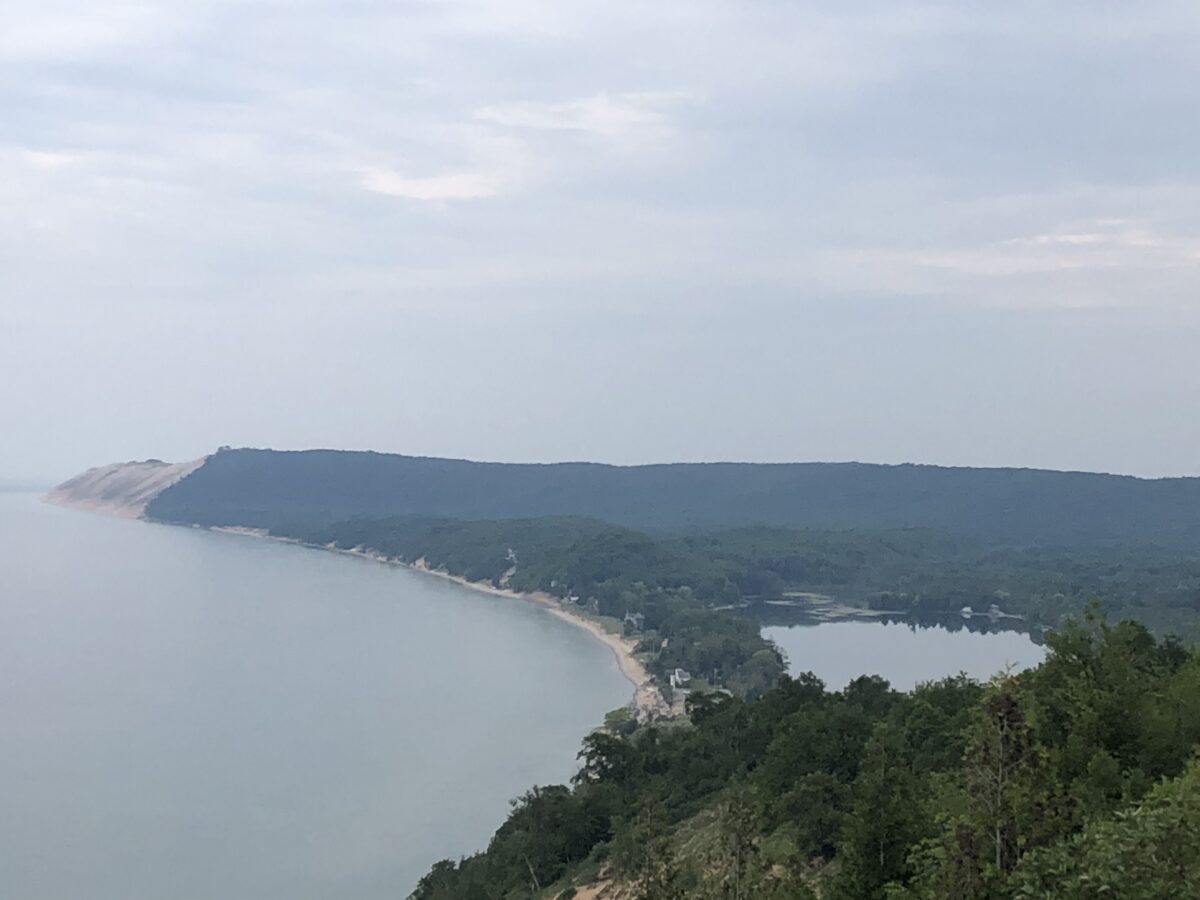
Every summer we spent a day at Lake Michigan with family. Picked a beach, built our annual sandcastle, packed a cooler full of food we were going to eat anyway. The kids got bigger, the sandcastles got more elaborate, and we photographed every single one. Some years we’d pick a different beach just to mix it up — but the day always happened and it was always happened on the coast of Lake Michigan somewhere.

Other than gas, that tradition cost us almost nothing. What it gave us was everything.

Another one that became a summer staple for us was flashlight tag — a nighttime game that costs nothing and gets better the more people you invite. Everyone grabs a flashlight, one person seeks, and the chaos begins. We’d plan it last minute, call a few neighbors, and end up outside until way too late. Some of our loudest, best nights of summer.

Think about your summer on a budget and what your version of that looks like. A yearly hike. A backyard movie night on the first Friday of summer. A road trip to a place you’ve never been. Traditions don’t need budgets — they need intention.

The Financial Angle Nobody Talks About

Here’s what most people miss: a planned summer is a cheaper summer.

When you have nothing on the calendar, boredom fills it — and boredom is expensive. You end up at the theme park on impulse, or buying things to fill the time, or saying yes to stuff you didn’t really want to do just because nothing else was happening.

A State Park annual pass, a cooler bag, and a community calendar will take you further than you think. We’d pack a lunch, grab the pass, and have a full day of hiking, canoeing, or fishing for practically nothing. That same money spent on a family trip to the movie theatre disappears before the previews end— a family of four can hit $100 between tickets and concessions without even trying.

The goal isn’t to have a cheap summer. The goal is to have a full one — full of memories, full of moments, full of the kind of days your kids will still talk about when they’re grown. Kids don’t care about summer on a budget, they just want to have fun.

That doesn’t cost as much as you think. It just takes a little planning before the last day of school.

See you at the top.